lipobak GmbH & Co. KG

Choose language

You remain on the same page.

Municipal wastewater operations

Abwasserbehandlung in Kläranlagen – präventiv statt reaktiv

lipasanF® supports microbial fat splitting at hotspots such as inlets, grease shafts and pumping stations. This can help reduce deposits and scum layers – and therefore the conditions under which hydrogen sulfide (H₂S) forms.

Quick overview

The focus is prevention and routine instead of reactive call-outs:

  • Keep fat layers/scum at hotspots biologically “moving”
  • Reduce H₂S risk, odour nuisance and corrosion pressure at critical points
  • Make cleaning and disposal workflows more predictable

Note: results depend on site conditions (hydraulics, temperature, load profile). We recommend a monitored pilot.

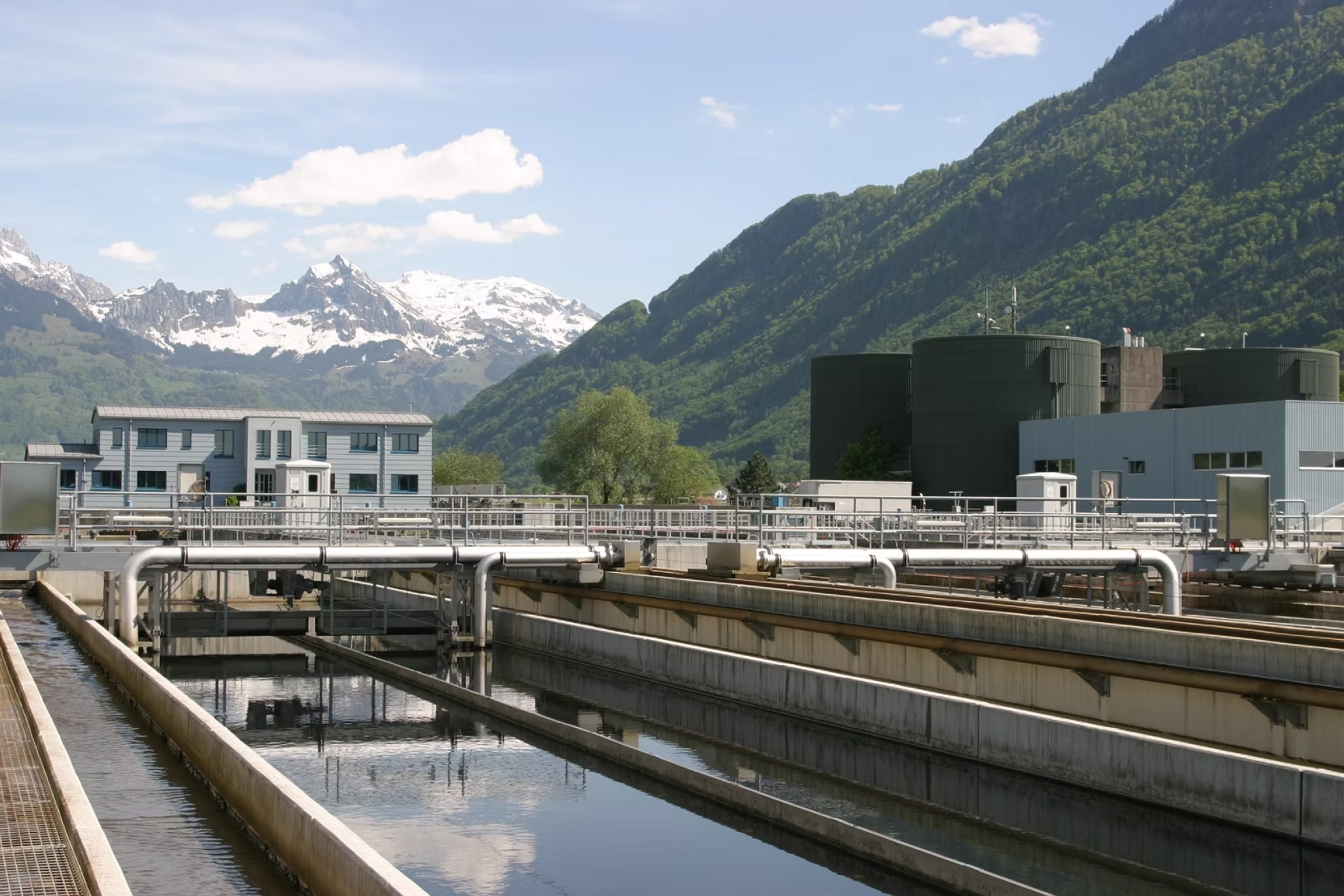
Wastewater treatment – plant and sewer network

Focus on hotspots

Inlets, pumping stations and grease shafts are typical areas where fats accumulate and H₂S can form.

Hotspots
Inlet, grease shaft, pumps
H₂S risk
Lower odour & corrosion
Predictable
Routine vs. emergencies
Biological
no harsh chemistry

No performance promises: dosing points/intervals/amounts are defined per site.

Why wastewater hotspots become costly and unpleasant

Fats and organic deposits build layers (e.g., scum). Beneath them, anaerobic conditions can form – a driver for sulfate reduction and H₂S. This leads to odour, corrosion and high operational effort.

Typical causes

  • Fat/deposit build-up in calm or cold zones and in shafts
  • Scum layer covers the surface → oxygen deficit → anaerobic processes
  • Sulfate reduction → sulfide/H₂S (odour & material attack)
  • Deposits reduce cross-sections and stress pump operation

Typical consequences

  • Odour complaints, safety concerns, unpleasant working conditions
  • Corrosion (incl. microbially influenced) and rehabilitation pressure
  • Unplanned actions: flushing, removal, vacuum truck, downtime

Many measures are symptomatic (flushing/mechanics). Prevention starts earlier: at the fat/deposit base and at hotspots.

The solution: lipasanF® – biological, preventive, routinable

lipasanF® supports microbial fat splitting. The goal is to destabilize fat deposits and convert them into biologically usable intermediates – before stable layers and anaerobic zones dominate.

How it works in the system

At hotspots, regular dosing can help reduce fat deposits and scum layers – and thus conditions that promote H₂S formation.

  • Fats are split into smaller components (lipolysis)
  • Deposits become softer/more mobile → less adhesion
  • Fewer anaerobic zones → lower H₂S potential

How we start (pilot)

Site-specific instead of generic recipes: dosing points, amounts and intervals are defined based on real conditions.

  1. 1 Hotspot check: inlets, pumps, shafts, sewer sections
  2. 2 Dosing concept: points, intervals, dilution, time window
  3. 3 4–6 week pilot with monitoring and fine-tuning
  4. 4 Routine operation: scheduled dosing + simple checks

Preferably dose during low-flow periods to use contact time.

Why switch

The goal is not “magic”, but reducing hotspot stress and stabilizing maintenance routines.

  • Fewer emergency call-outs and fewer surprises
  • More pleasant environment due to reduced odour load
  • Material-friendly approach without aggressive chemicals

Note: outcomes depend on load profile, temperature, hydraulics and geometry. We recommend site-specific design and monitoring.

ROI & operational reliability

Preventive routines can shift reactive costs (vacuum trucks, removals, failures) into more predictable budgets. References mainly highlight day-to-day relief: less manual work, less disposal, less stress at hotspots.

What changes in daily operations

When fat deposits and scum layers decrease, removals become less frequent and workflows become calmer.

  • Less manual removal at grease shafts/hotspots
  • Fewer vacuum truck/disposal runs (site-dependent)
  • More stable pump operation

Safety & sustainability

H₂S is not just an odour issue – it is also about safety and materials. Prevention can reduce risks.

  • Lower H₂S potential at critical points
  • Less corrosion pressure and rehab stress
  • Biological approach, easy to embed into routines

For solid ROI numbers, run a monitored pilot and document intervals, complaints, alarms and (if available) H₂S measurements.

Compare: classic measures vs. preventive biology

Many measures start only when the hotspot is already blocked. Preventive dosing starts earlier.

Criterion Mechanics/flush Chemicals lipasanF®
Principle symptomatic symptomatic root-cause & routinable
Cost structure high per intervention ongoing / material-critical predictable (routine/pilot)
Materials/environment neutral/mechanical potentially aggressive biological & material-friendly
Long-term value limited without root cause limited without root cause high with proper design

The best approach is often a mix: preventive routines + targeted mechanical actions when needed.

Practice: typical use areas

Most systems have recurring hotspots. Prevention pays off exactly there.

Inlet & grease shaft

Reduce scum layers and fat deposits

Stable fat layers often form in shafts. Routine dosing can destabilize deposits and simplify maintenance.

  • Extend removal intervals (site-dependent)
  • Fewer hardened fat chunks
  • Simple routine during low-flow periods

Note: dosing and intervals are defined per site.

Pumps & sewer network

De-risk hotspots, reduce H₂S pressure

Scum and fat films can promote anaerobic zones. Prevention can reduce odour and corrosion pressure.

  • Less scum build-up at critical points
  • More stable pump operation (less clogging)
  • Operational relief for staff

Note: dosing and intervals are defined per site.

CSO/overflow & site area

Buffer odour peaks

During stagnation or fluctuations, odour peaks occur. Hotspot dosing can reduce the risk.

  • Fewer odour peaks (site-dependent)
  • Fewer complaints
  • Predictable handling of critical time windows

Note: dosing and intervals are defined per site.

Do you have a hotspot?

We help assess the situation, select dosing points and define a pilot setup including monitoring checkpoints.

Practice videos: How it works on site

Three real-world examples from operators and associations: baseline conditions, on-site approach, and what operators need to consider in practice.

Rheinberg reference: grease shaft

Operator report from Rheinberg: grease shaft setup, aeration and mixing, and practical handling in day-to-day on-site operations.

Practice

Subtitles: select a language in the player (if available).

What you see in the video

  • Plant context: grease is collected in a grease shaft; disposal and handling require ongoing operational and logistical effort.
  • Technology: aeration and mixing via installed components and connections, resulting in a more homogeneous emulsion instead of a surface grease layer.
  • Operational benefit: simplified storage and handling, short intervention times, and reduced staff movement during daily routines.
Show transcript / key takeaways
Key takeaways: grease shaft baseline conditions, technical implementation (aeration and connection), operational observations, and organisational benefits in daily practice.

Interview: H₂S, corrosion, operations

Expert interview from practice: how H₂S forms, its implications, and how the application is integrated into operational workflows.

Practice

Subtitles: select a language in the player (if available).

What you see in the video

  • Context: H₂S forms under anaerobic conditions and can cause corrosion, occupational safety issues, and process-related challenges.
  • Approach: dosing volumes depend on plant section, wastewater flow, and grease load; technical effort remains manageable.
  • Process perspective: fatty acids and glycerine are classified as nutrient and carbon sources within the biological treatment process.
Show transcript / key takeaways
Key takeaways: formation of H₂S, impacts on corrosion and occupational safety, as well as application, handling, and process integration in operations.

Amper Association: grease handling in operation

Association reference: baseline situation, pilot setup with aeration and dosing, and observations during ongoing on-site operations.

Practice

Subtitles: select a language in the player (if available).

What you see in the video

  • Baseline: grease from the sewer network is collected in sand and grease traps and dewatered in a collection basin.
  • Pilot setup: air lance for mixing, dosing via IBC container, and defined activation and temperature management.
  • Test observations: changes in consistency after 24/48 hours and transfer or utilisation in the digester.
Show transcript / key takeaways
Key takeaways: plant setup, pilot configuration (aeration and dosing), timeline of observations, and documented results over several weeks.

Would you like to apply this to your facility?

We identify hotspots and operating conditions and derive a suitable pilot phase and dosing logic — aligned with infrastructure, load, and operating times.

Tech & dosing

Fast start, clear routine: define dosing point, use contact time, adjust interval to the load profile.

Dosing point

Hotspots instead of “everywhere”

We dose where fats and deposits actually form: shafts, inlets, pumping stations or defined sewer sections.

  • Hotspot selection based on geometry & hydraulics
  • Manual dosing or dosing station possible
  • Routine rather than one-off actions

Application

In 4 steps

Application is simple – dilution, timing and consistency matter.

  1. 1 Typical dilution 1:10–1:15 (site-dependent)
  2. 2 Apply at the dosing point (preferably low-flow)
  3. 3 Use contact time, then normal operation
  4. 4 Fine-tune interval based on load/temperature

We provide a site-specific SOP/instruction.

Operation

Parameters & safety

Handling is straightforward; design is site-specific.

  • Material-friendly for common plastics/metals (site-dependent)
  • Consider temperature and load profile
  • Monitored pilot recommended

Want to define dosing points?

We review hotspots, propose dosing points and define a pilot setup – including a monitoring checklist.

Note: amounts, intervals and SOP are defined per site.

Frequently asked questions (FAQ)

Short and practical: what operators typically ask.

Can lipasanF® be used in grease shafts and inlets?
Yes. Typical dosing points include grease shafts, inlets, pumping stations or defined sewer sections. Design is site-specific.
How is this related to H₂S?
Scum/fat layers can displace oxygen. Beneath the layer, anaerobic conditions are more likely, which can promote sulfate reduction. Prevention aims to reduce these hotspot conditions.
How quickly can effects be noticed?
Often within days to weeks – depending on load profile, temperature, hydraulics and the extent of deposits. A monitored pilot is recommended.
Is handling safe and practical?
References highlight simple handling (dosing as a short work step). Storage/handling follow product guidance; we provide a site-specific SOP.
Do we still need flushing/mechanics?
Often yes. A combination is common: prevention as routine plus targeted mechanical actions when a hotspot is already heavily loaded.
Get in touch

If you have data (H₂S, complaints, removal intervals), it helps evaluate the pilot.

Contact & consultation

We review your situation, estimate dosing needs & savings potential, and guide the pilot phase — transparent and measurable.

Next step: Briefly describe your use case & hotspots — we’ll provide an initial assessment (incl. dosing logic/pilot phase).

Phone: +49 (0) 6152 978 938 0

  • Proven in practice since 2017
  • Support with dosing recommendation & pilot phase
  • No modifications required (manual dosing or pump)
Name
Company (optional)
Email
Phone (optional)
What is it about?
Location/ZIP (optional)
Preferred callback window (optional)
Message

We use your data only to answer your request.