lipobak GmbH & Co. KG

Choose language

You remain on the same page.

Expert page: Households

Fat in your household drain? A biological solution with lipasanF®

Say goodbye to clogs and smells — without harsh chemicals. lipasanF® breaks down fats microbially into easier-to-degrade components. Safe for common pipe materials, simple to use, and more sustainable for your home and the environment.

Quick overview

Preventive biological fat splitting instead of “drain cleaner” cycles:

  • Gradually reduce deposits and new buildup
  • Reduce odors (incl. H₂S) depending on the starting situation
  • Predictable routine: dose in the evening, let it work overnight

Note: effect and speed depend on deposits, usage, temperature, and pipe layout.
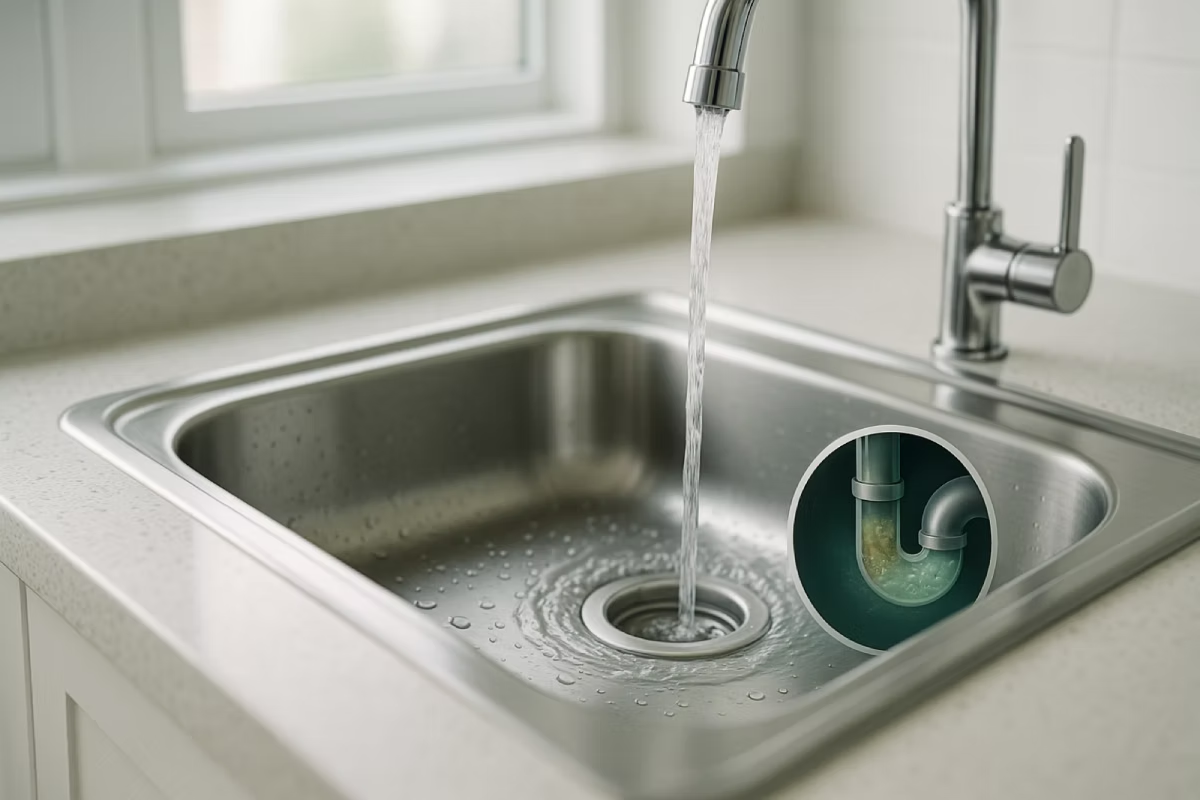
Kitchen drain – symbolic image

Typical household hotspot

Fats cool down, stick to surfaces and form a film over time — especially in kitchens and shared lines.

Practice
proven routine
Gentle
no harsh chemicals
Simple
dose in the evening
Predictable
routine over emergencies

No “magic numbers” — we focus on a realistic routine and suitable dosing.

Why household drain fat is so persistent

Fats, oils and food residues cool down in the pipe, stick, and build a layer. With each use it grows — flow drops, gurgling starts, odors rise.

Causes

  • Cooling: fat solidifies and sticks to pipe walls
  • Biofilm + residues make deposits tougher
  • Multi-unit effect: cumulative load in shared pipes
  • Idle periods: fat can settle instead of moving on

Effects

  • Clogs: cross-section narrows over time
  • Odors: anaerobic processes increase smell
  • Costs: cleaning/emergency service can get expensive

Chemical cleaners often act short-term, stress materials and the environment, and do not replace prevention.

Solution: microbial fat splitting — preventive & continuous

lipasanF® uses microorganisms and enzymes to break fat molecules into easier-to-degrade components. Instead of hard deposits, a substrate forms that continues to degrade biologically.

How it works in the pipe

Biology works along the line — especially during idle phases.

  • Lipolysis starts after dosing
  • Deposits loosen step by step
  • Routine reduces new buildup

How to start at home

A simple procedure — no technician appointment.

  1. 1 Dilute (typically 1:10 to 1:15)
  2. 2 Pour in slowly in the evening
  3. 3 Let it work overnight
  4. 4 Adjust interval to your needs

Tip: avoid flushing with hot water immediately after dosing.

Why it makes sense

Prevention makes issues predictable — instead of “blocked drain” weekends.

  • Fewer disruptions & stress
  • Gentler than caustic products
  • More sustainable for wastewater and waterways

Note: results depend on initial condition, temperature, pipe layout, and usage.

Typical household use cases

Three common scenarios — with a clear routine instead of guesswork.

Kitchen

Kitchen drain & trap

Fats from cooking and washing up are the classic case. Prevention helps keep the cross-section stable.

  • Reduce deposits gradually
  • Reduce odors
  • Less gurgling and backup

Dose and interval should match usage and hotspots.

Bathroom / utility

Shower, sink, washing machine

Soap residues, fats and biofilm can slow drains — a routine helps.

  • More stable flow
  • Fewer unpleasant odors
  • Predictable instead of emergency

Dose and interval should match usage and hotspots.

Multi-unit

Apartment building & shared lines

Many kitchens = cumulative load. Prevention can reduce disruptions and complaints.

  • Fewer emergency call-outs
  • More predictable maintenance
  • ESG-friendly approach (biology)

Dose and interval should match usage and hotspots.

Not sure? Quick check helps

We help with dosing, interval and meaningful hotspots — for your home or building.

Practice videos: what it looks like at home

One how-to and one reference report — no hype, just the process.

How-to: using lipasanF®

Quick routine: dilute, dose in the evening, let it work overnight — clean and simple.

Practice

Insert how-to video

Set $howtoYoutubeId above (or switch to your MP4 assets) to activate this card.

Subtitles: choose language in the player (if available).

What you will see

  • Dilution and dosing
  • Overnight idle phase
  • Interval by need
Show transcript / key points
Optional: add a transcript later (SEO/SGE).

Reference: Andreas (Munich)

Starting situation, steps and everyday outcome — understandable and not exaggerated.

Practice

Subtitles: choose language in the player (if available).

What you will see

  • Starting point: odor & deposits
  • Process: diluted evening dosing
  • Outcome: noticeably more stable
Show transcript / key points
Optional: add a transcript later (SEO/SGE).

Want to test this at your place?

We’ll tell you if a routine makes sense and how to dose it.

How to use it — easy to start

A few steps and a clear routine: simple and practical.

Hotspot

Where to dose?

Typically the kitchen drain. For buildings: suitable hotspots in shared lines.

  • Goal: relieve fat hotspots
  • Pour slowly instead of dumping
  • Multiple points if needed

Steps

4-step routine

Evening dosing — idle time matters.

  1. 1 Mix 1:10 to 1:15
  2. 2 Pour in slowly
  3. 3 Let it work overnight
  4. 4 Adjust interval (more frequent at first, then routine)

Tip: avoid hot flushing right after dosing.

Handling

Parameters & storage

Practical rules are enough.

  • Store: +5 to +12 °C, dry
  • Use: about +5 to +30 °C
  • Suitable for common pipe materials

Get a recommendation instead of guessing

Tell us where the issue is — we suggest dosing and interval.

Note: for fully blocked drains, mechanical opening may be required first.

Frequently asked questions

Short and clear so you can start confidently.

Does lipasanF® work on existing deposits?
Yes. Deposits are reduced gradually. Speed depends on deposits and usage.
Is it safe for plastic and metal pipes?
Yes. Microbial fat splitting works without harsh caustic ingredients and is gentle on materials.
How fast will I notice results?
Often within days (odor/flow), clearer over weeks — depending on the starting condition.
How should I store lipasanF®?
Dry, at +5 to +12 °C. Typical use between +5 and +30 °C.
Is it suitable for apartment buildings / property managers?
Yes. Preventive dosing at suitable points in vertical/shared lines can help reduce disruptions.
Ask a question

If you want, we can later add real transcripts in the video details (SEO).

Contact & consultation

We review your situation, estimate dosing needs & savings potential, and guide the pilot phase — transparent and measurable.

Next step: Briefly describe your use case & hotspots — we’ll provide an initial assessment (incl. dosing logic/pilot phase).

Phone: +49 (0) 6152 978 938 0

  • Proven in practice since 2017
  • Support with dosing recommendation & pilot phase
  • No modifications required (manual dosing or pump)
Name
Company (optional)
Email
Phone (optional)
What is it about?
Location/ZIP (optional)
Preferred callback window (optional)
Message

We use your data only to answer your request.